7 Tips for Choosing a Reliable Bag Chain Supplier
Choosing a reliable Bag Chain supplier affects more than appearance. It influences product safety, durability, delivery stability, and customer trust.
A polished chain may look impressive under showroom lights. However, its clasp can loosen after repeated use. Its plating may fade against denim, leather, or daily skin contact. That is why supplier evaluation must include materials, production controls, testing, communication, and after-sales support. David Chen, a bag-chain sourcing consultant with more than fifteen years of factory experience, says, “A dependable supplier proves quality before asking for a large order.” This principle keeps buyers focused on evidence instead of attractive promises.
The following seven tips examine practical details that are often overlooked. They cover sample inspection, metal specifications, plating thickness, tensile testing, factory capability, delivery records, and transparent pricing. Ask for material certificates when appropriate. Compare sample weight with the approved specification. Check whether every clasp closes smoothly. Small inconsistencies matter.
No checklist is perfect.
A buyer can still miss a weak weld or an unclear production change. I have seen purchasing decisions rely too heavily on photographs and low quotations. That approach often creates expensive revisions later. Reliable sourcing requires patient questions and written confirmations. It also requires accepting that the cheapest supplier may not offer the lowest total cost. With careful verification, businesses can choose a Bag Chain partner that supports consistent quality, realistic lead times, and long-term product development.
Define Your Bag Chain Requirements and Quality Standards
Choosing a reliable bag chain supplier starts with a precise definition of your product needs. Decide the chain length, link shape, metal type, finish, and attachment method. Consider the bag’s weight and daily use. A delicate shoulder bag needs different support from a heavy travel bag. Write these details into one measurable specification sheet.
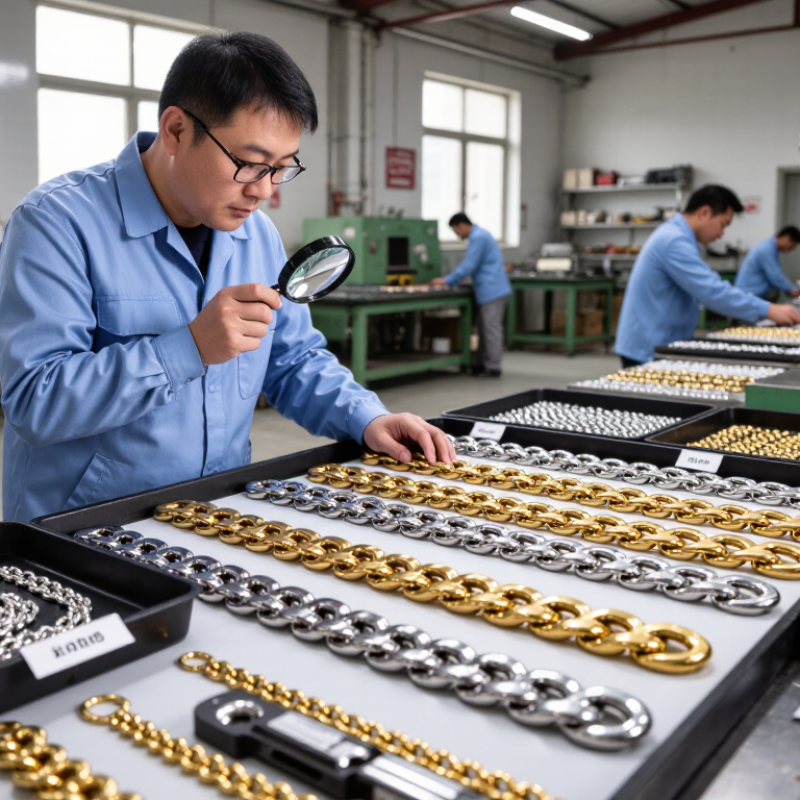
Quality standards should include load capacity, surface smoothness, color consistency, and resistance to scratches or corrosion. Ask for material documentation and test samples before placing a larger order. Inspect the clasp, soldered joints, and plating under bright light. Small defects often become obvious after repeated opening and closing. Do not trust appearance alone.
Tip: Request several samples from different production batches. Compare their weight, flexibility, finish, and connector strength. A supplier should explain testing methods clearly and provide realistic tolerances. However, perfection on paper can be misleading. I have seen attractive samples fail after basic stress testing. That mistake taught me to test the chain with the actual bag hardware, not separately. Keep inspection records, including photos, measurements, and delivery dates. These details make quality discussions more objective and help reveal whether the supplier can maintain consistent production.
Compare Pricing, Minimum Orders, and Delivery Reliability
7 Tips for Choosing a Reliable Bag Chain Supplier
Compare Pricing, Minimum Orders, and Delivery Reliability
A low unit price can hide plating fees, packaging costs, and expensive transport. Ask each supplier for a landed-cost quote. Include tooling, samples, inspection, and customs paperwork. Compare identical chain length, metal grade, finish, and clasp specifications. Otherwise, the cheapest quote may simply be incomplete. Tip one: request a cost breakdown. Tip two: compare three equivalent quotations. Tip three: confirm price validity and adjustment terms.
Minimum order quantities affect cash flow and inventory risk. Ask for price tiers at 500, 1,000, and 5,000 pieces. A smaller trial order may cost slightly more, but it limits quality exposure. Check whether mixed colors or finishes count toward one minimum. The wrong assumption can leave unused stock. Tip four: negotiate a pilot quantity. Tip five: calculate the cost of slow-moving inventory. During supplier evaluations, I have found that buyers often focus too heavily on the unit price.
Delivery reliability needs measurable evidence. Request the last six months’ promised and actual shipment dates. Calculate the on-time rate, not just the average lead time. The World Bank’s 2023 Logistics Performance Index identifies timeliness as a core logistics measure. Sea-Intelligence’s Global Liner Performance reports have also shown schedule reliability frequently near 50–60% in recent periods. Build buffer days into launch plans. Tip six: require written delay notifications. Tip seven: ask for a backup production plan and independent references. Test orders remain useful, though they cannot predict every seasonal delay.
7 Tips for Choosing a Reliable Bag Chain Supplier
Compare pricing, minimum orders, and delivery reliability before selecting a supplier.
Lower unit prices and minimum order quantities reduce purchasing risk, while a higher on-time delivery rate indicates stronger supply reliability. Request written quotations, confirm production capacity, and verify delivery performance before placing an order.
Assess Communication, Customization, and Long-Term Support
7 Tips for Choosing a Reliable Bag Chain Supplier
Tip: Test communication before placing an order. Ask for a clear reply about chain size, finish, lead time, and minimum quantity. Reliable suppliers answer directly and flag unclear details. Short replies are not always efficient. Ask whether one contact will manage your project.
Tip: Share a detailed tech pack with measurements, reference photos, and tolerance limits. Request a physical sample before approving bulk production. Check the clasp movement, plating color, link strength, and surface marks. Customization should include practical advice, not just acceptance. An experienced supplier may suggest a stronger connection or a better coating for daily use.
Tip: Confirm how changes are recorded. Each revision should show a date, drawing, and sample status. Ask for inspection photos and material documentation. These records support quality decisions. They also expose communication gaps early. Do not rely only on attractive samples.
Tip: Discuss problem handling before production starts. Ask who pays for defective pieces and how replacements are arranged. A written process is safer than a friendly promise.
Tip: Review production updates at agreed stages. Photos of unfinished chains can reveal scratches, uneven color, or incorrect hooks.
Tip: Examine customization limits. Some finishes may require higher quantities or longer sampling times. Honest explanations build trust.
Tip: Evaluate long-term support, not only the first quotation. Ask about repeat orders, spare parts, and finish consistency. A supplier may perform well once and still disappoint later. That possibility deserves attention. Quarterly reviews and retained samples can help both sides compare results.