| Primary Material | High-Density Polyethylene (HDPE) | Lightweight, impact-resistant, corrosion-resistant, and suitable for rotational molding or injection molding. UV protection may be added for outdoor use. | Indoor facilities, parks, schools, commercial waste stations, and wheeled containers. | Confirm resin grade, recycled-content percentage, UV package, wall thickness, color consistency, and impact testing. | Low–Medium |
| 304 Stainless Steel | Strong, hygienic, easy to clean, and generally resistant to corrosion in normal indoor and urban environments. Brushed and polished finishes are common. | Hotels, offices, airports, healthcare areas, shopping centers, and premium interiors. | Check steel grade, sheet thickness, weld quality, edge finishing, fingerprint resistance, and surface passivation practices. | Medium–High |
| Galvanized Steel | Steel substrate protected by a zinc coating; offers good rigidity and improved corrosion resistance compared with untreated carbon steel. | Outdoor public areas, industrial sites, transport facilities, and heavy-duty waste collection points. | Verify zinc-coating method, coating thickness, drainage design, corrosion testing, and protection of cut or welded areas. | Medium |
| Powder-Coated Carbon Steel | Rigid and economical, with a decorative powder coating available in many colors. Performance depends heavily on pretreatment and coating thickness. | Offices, retail spaces, public buildings, campuses, and coordinated interior design projects. | Ask for pretreatment details, coating type, adhesion testing, salt-spray results where relevant, and repair procedures for chips. | Low–Medium |
| Fiberglass-Reinforced Plastic (FRP) | Lightweight relative to its stiffness, non-rusting, and suitable for molded shapes. Surface finish and resin selection affect weatherability. | Coastal locations, parks, campuses, leisure facilities, and custom architectural installations. | Confirm resin system, UV resistance, laminate thickness, fire-performance requirements, and consistency between molded units. | Medium–High |
| Design and User Function | Open-Top Design | Fast disposal access and simple construction; usually requires a separate liner or removable inner container. | High-traffic indoor areas, food courts, offices, and event venues. | Check rim safety, liner retention, spill containment, cleaning access, and compatibility with standard waste bags. | Low |
| Swing, Flap, or Push Lid | Helps conceal waste and may reduce visual exposure. Moving parts require durable hinges, stops, and easy cleaning. | Offices, hospitality areas, washrooms, retail spaces, and public interiors. | Evaluate cycle testing, hinge material, pinch-point protection, lid noise, replacement-part availability, and odor-control options. | Low–Medium |
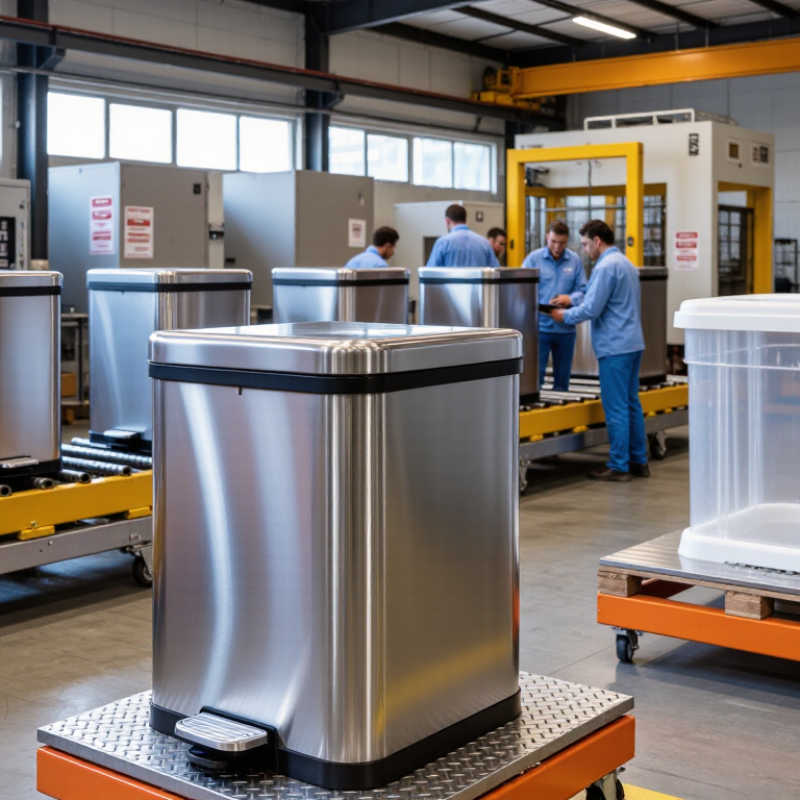
| Foot-Pedal or Hands-Free Design | Allows operation without hand contact; pedal, linkage, and lid mechanism require alignment and durability checks. | Healthcare, food preparation, laboratories, washrooms, and hygiene-sensitive workplaces. | Confirm pedal load testing, lid-closing performance, stability, removable inner bucket, and cleanable seams. | Medium |
| Separated Recycling Compartments | Combines two or more waste streams in one station and uses labels, openings, or color coding to guide sorting. | Offices, campuses, airports, public buildings, shopping areas, and sustainability programs. | Review compartment volume balance, contamination-reduction signage, liner access, modularity, and compatibility with local recycling rules. | Medium–High |
| Product and Manufacturing Capability | Standard Product Range | Common capacities typically range from approximately 10 to 240 liters, depending on product type and intended use. | Projects requiring predictable dimensions, repeat orders, and straightforward replacement planning. | Compare available capacities, dimensions, lid types, liner systems, drawings, packaging, and spare-part support. | Low–Medium |
| Custom Engineering | Ability to modify dimensions, openings, colors, logos, mounting methods, liners, and access features using drawings or prototypes. | Architectural projects, public-space programs, branded facilities, and unusual installation constraints. | Request CAD files, prototype policy, design-change controls, tooling ownership terms, and sample approval procedures. | Medium–High |
| Quality Control System | A documented system should cover incoming materials, dimensions, finish, function, packing, and final inspection. | All commercial procurement, especially repeat orders and multi-site rollouts. | Look for inspection records, traceability, defect classification, corrective-action procedures, and pre-shipment inspection access. | Essential |
| Sustainability and Circularity | Relevant factors include recycled content, mono-material construction, repairability, replaceable components, packaging reduction, and end-of-life recyclability. | Public procurement, corporate sustainability programs, green buildings, and long-term facility management. | Request material declarations, recycled-content evidence, packaging data, product life-cycle information, and take-back or repair options. | Essential |
| Supply and After-Sales Support | Reliable suppliers provide clear production schedules, export packaging, installation guidance, replacement parts, and warranty terms. | Large projects, phased purchasing, international sourcing, and facilities with standardized equipment. | Check stated lead-time assumptions, minimum order quantities, carton protection, warranty exclusions, service response, and spare-part availability. | Medium |