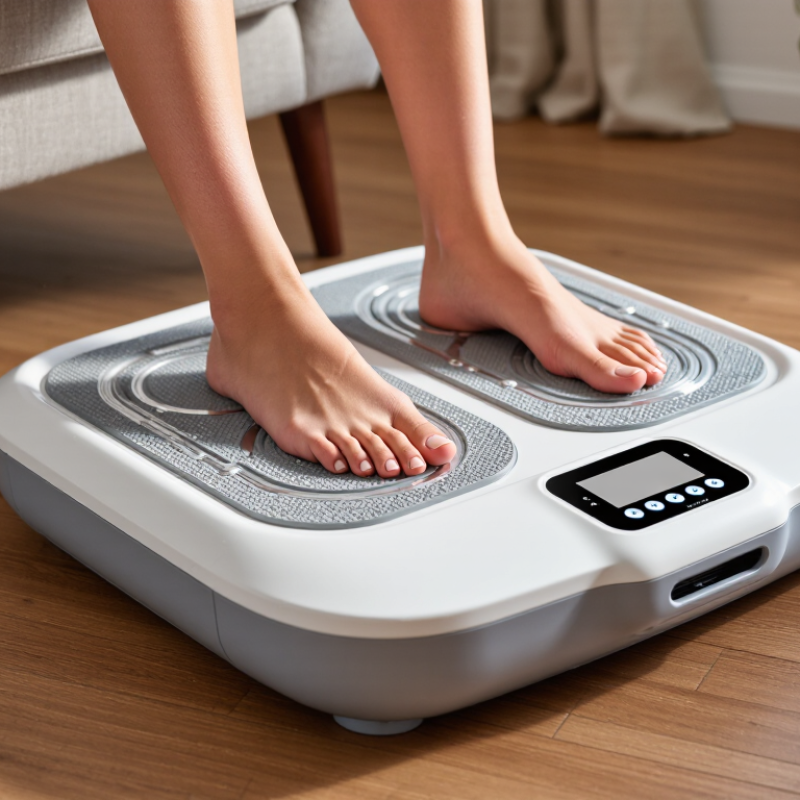
| General relaxation and daily wellness | Simple controls, comfortable foot placement, low operating noise, and an automatic timer | Look for adjustable intensity and multiple preset programs rather than a single fixed setting | Begin with the lowest comfortable intensity and follow the operating manual; avoid increasing intensity solely to obtain faster results | Confirm that the platform is stable, easy to clean, and large enough to support both feet comfortably | PEMF devices should not be presented as a substitute for sleep, exercise, medical care, or stress-management practices |
| Temporary relief of foot or ankle discomfort | Adjustable intensity, localized foot coverage, clear controls, and a short-session timer | Choose a model that allows gradual adjustment and does not require users to tolerate strong sensations | Use only as directed. Stop if pain, numbness, skin irritation, dizziness, or unusual symptoms occur | Check whether the device is intended for the specific body area and whether its instructions explain limitations and contraindications | Evidence for PEMF varies by device and condition. Pain relief claims should be evaluated cautiously and should not delay diagnosis of persistent pain |
| Exercise recovery and muscle comfort | Repeatable programs, adjustable session duration, and a design that can be used without restricting normal recovery routines | A programmable timer and saved settings are more useful than a large number of poorly explained modes | Use alongside hydration, rest, mobility work, and appropriate training-load management | Review whether the device has clear instructions for frequency of use and whether the control panel is easy to read | PEMF is not a replacement for treatment of an acute injury. Seek professional assessment for swelling, deformity, severe pain, or loss of function |
| Support for circulation-related comfort | Comfortable, non-constrictive foot support and a conservative intensity range | Do not select a product solely because it advertises improved circulation; verify the intended use and available safety information | Use only after discussing the product with a healthcare professional if you have a diagnosed vascular condition | Check for warnings concerning blood clots, vascular disease, reduced sensation, implanted electronic devices, and pregnancy | A PEMF foot machine should not be used to diagnose or treat a suspected clot, severe circulation problem, or unexplained swelling |
| Neuropathy, reduced sensation, or diabetes-related foot concerns | Low-intensity control, conservative presets, visible status indicators, and easy supervision | Prioritize safety information and professional guidance over maximum intensity, frequency, or marketing claims | Consult a qualified healthcare professional before use, especially when sensation is reduced or wounds are present | Inspect the feet before and after use; verify whether the instructions prohibit use on open wounds, infected skin, or areas with impaired sensation | Reduced sensation can make it difficult to notice heat, pressure, or irritation. PEMF should not replace diabetes foot care or clinical treatment |
| Joint stiffness or mobility support | Foot and ankle coverage, adjustable programs, easy setup, and a timer that supports consistent use | Select a device with transparent technical specifications, including waveform information when available and clearly stated output limits | Combine with clinician-approved movement and stretching; discontinue use if symptoms worsen | Check whether the device is designed for wellness use or has a specific regulated indication in your jurisdiction | PEMF performance cannot be judged from frequency alone. Device output, waveform, coil design, treatment area, and protocol all matter |
| Convenience for home use | Compact construction, low weight, automatic shutoff, readable controls, and a reliable power supply | Compare product dimensions, cord length, storage requirements, warranty terms, and return policy | Choose a routine that fits your schedule rather than selecting a device with complicated settings you are unlikely to use | Look for a complete user manual, electrical safety information, cleaning instructions, and accessible customer support | Home-use convenience does not establish effectiveness. Avoid products that promise universal results or guaranteed cures |
| Use with an implanted electronic medical device | Clear electromagnetic compatibility warnings and manufacturer guidance | Do not rely on generic statements such as “safe for everyone”; obtain specific advice before use | Do not use until a healthcare professional and the relevant device manufacturer confirm compatibility | Check warnings for pacemakers, implanted cardioverter-defibrillators, neurostimulators, insulin pumps, and other electronic implants | Electromagnetic fields may interfere with some implanted or wearable medical devices. Professional clearance is essential |
| Comparing technical specifications | Transparent reporting of frequency, magnetic flux density, waveform, coil arrangement, treatment area, and timer range | Frequency is commonly reported in hertz, while magnetic flux density may be reported in gauss or millitesla; 1 millitesla equals 10 gauss | Compare devices using the complete specification set and the actual intended protocol, not one headline number | Confirm that specifications are measured or documented consistently and that the manual explains how settings affect output | There is no single specification that identifies the “best” PEMF device for every goal; suitability depends on the user, condition, and intended use |