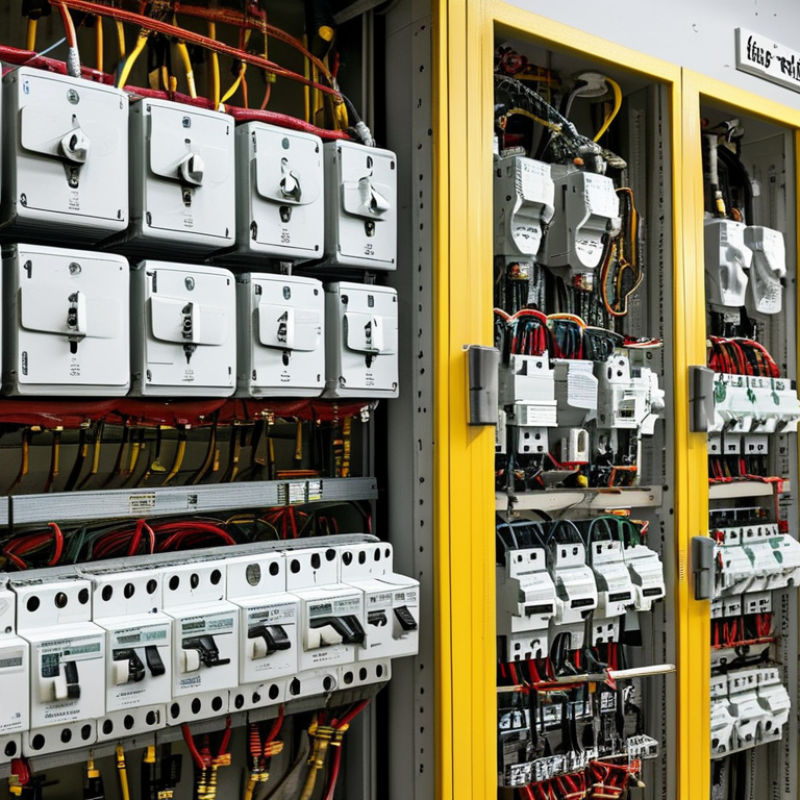
| Indoor, clean and dry areas | Residential rooms, offices and climate-controlled commercial spaces with minimal dust or moisture. | Standard flush- or surface-mounted distribution board with a metal or insulated enclosure. | Typically IP30 or higher, subject to local electrical requirements. | Painted steel or flame-retardant insulated material; corrosion protection is usually not a primary concern. | Select breakers for the system voltage, continuous load, conductor ampacity and available short-circuit current. Add residual-current protection where required. | Provide clear working space, proper circuit labeling and sufficient spare ways for future circuits. |
| Indoor damp or humid areas | Basements, utility rooms, laundry areas or locations subject to condensation and occasional splashing. | Moisture-resistant distribution board with sealed cable entries and a suitable door gasket. | Typically IP44 to IP54, depending on the actual exposure. | Powder-coated steel, stainless steel or a suitably rated insulated enclosure. | Use residual-current protection where wet-area rules require it. Protect cable entries against water migration. | Do not install the board where direct spray, pooling water or persistent condensation can occur unless specifically rated for that exposure. |
| Outdoor and weather-exposed areas | Rain, sunlight, temperature changes, wind-driven dust and outdoor maintenance conditions. | Outdoor-rated weatherproof distribution board with a lockable, gasketed enclosure and rain protection. | Commonly IP54 to IP65; select the rating according to exposure and local code. | UV-resistant coated metal, stainless steel or outdoor-rated polymer enclosure. | Consider surge protective devices where lightning or switching surges are likely. Verify breaker temperature derating where applicable. | Use downward-facing cable entries or correctly sealed glands. Prevent water from entering through the top of the enclosure. |
| Industrial and high-dust areas | Manufacturing floors, workshops, warehouses and areas with airborne dust or mechanical impact. | Heavy-duty industrial board with a robust enclosure, secure door and protected internal components. | Typically IP54 to IP65; use a higher level where dust ingress may affect operation. | Powder-coated steel or stainless steel; select impact resistance suitable for the work area. | Check the board assembly rating, temperature rise, conductor spacing and short-circuit withstand capability. | Keep the board away from vibration, corrosive process emissions and areas where forklifts or machinery may cause impact. |
| Corrosive or coastal environments | Salt spray, marine air, chemical vapors, wastewater facilities or aggressive cleaning agents. | Corrosion-resistant board with sealed construction and hardware selected for the chemical environment. | Typically IP55 to IP66, based on moisture, dust and cleaning conditions. | Marine-grade stainless steel, corrosion-resistant coated steel or chemically compatible polymer. | Use compatible terminals, busbars, glands and fasteners. Inspect for corrosion during scheduled maintenance. | Confirm material compatibility with the specific chemicals, salt concentration, cleaning method and ambient temperature. |
| High-temperature locations | Boiler rooms, process areas, unconditioned enclosures or spaces with elevated ambient temperature. | Thermally suitable board with adequate ventilation or thermal management, installed away from direct heat sources. | Select the enclosure rating required by the environment, commonly IP44 to IP65. | Heat-resistant coated metal or an insulated enclosure rated for the measured ambient temperature. | Apply manufacturer-specified temperature derating. Avoid exceeding breaker, busbar and cable operating limits. | Do not block ventilation openings. Calculate heat dissipation when multiple loaded breakers are installed together. |
| Public, commercial or restricted-access areas | Schools, offices, retail buildings, public facilities and locations requiring controlled access. | Enclosed distribution board with a lockable door, clear circuit identification and protected live parts. | Typically IP30 or higher indoors; increase protection where public contact or moisture is possible. | Durable painted steel or impact-resistant insulated enclosure with a corrosion-resistant finish. | Use appropriate overcurrent, residual-current and surge protection according to the building design and applicable code. | Provide durable labels, restricted access and sufficient room for safe testing and maintenance. |
| Hazardous or potentially explosive areas | Areas where flammable gases, vapors, combustible dust or fibers may be present. | Only a board and enclosure specifically certified for the classified hazardous area. | The required protection depends on the area classification; ordinary IP-rated boards are not automatically suitable. | Certified construction and materials selected for the hazardous-location classification and chemical exposure. | Use only approved components, cable entries and accessories. Follow the relevant hazardous-location installation standard. | The classification must be determined by a qualified professional before equipment selection or installation. |