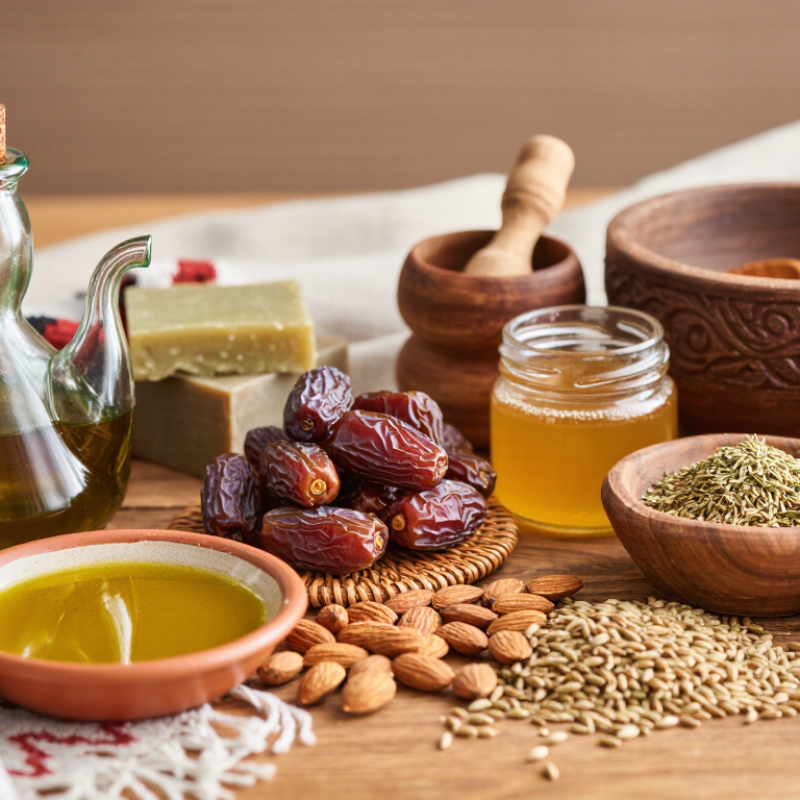
| Olive oil | Extra virgin and other grades of olive oil | Made from olives grown in the region; flavor and aroma vary by cultivar, harvest timing, and processing. Extra-virgin status should be supported by applicable chemical and sensory testing. | Olive harvesting and pressing generally take place in autumn, with timing varying by location and growing conditions. | Bottles, tins, and food-service containers; bulk supply may also be available. | Check grade, harvest or best-before information, origin documentation, packaging integrity, and laboratory results where required. Confirm import, labeling, and food-safety rules in the destination market. |
| Dates | Medjool dates and other date varieties | Medjool dates are typically large, soft, and sweet. Texture and size depend on variety, maturity, handling, and storage. | Harvest commonly falls in late summer or autumn, depending on the growing area and season. Jericho and the Jordan Valley are known date-growing areas. | Whole dates, pitted dates, retail packs, and bulk cartons; fresh and dried product specifications can differ. | Agree on variety, grade, size range, moisture or texture specification, pit status, crop year, and storage conditions. Check applicable residue, food-safety, and plant-health requirements. |
| Za’atar and herb blends | Za’atar-style dried herb blends, sometimes mixed with sumac, sesame, or salt | Recipes differ by producer and region. The word “za’atar” may refer to an herb or to a prepared seasoning blend, so ingredient details matter. | Dried herbs and blends can generally be supplied year-round, subject to harvest, drying, and stock availability. | Whole or crushed dried herbs; blended seasoning in sealed retail packs or bulk food-service packs. | Request the full ingredient list, allergen declaration for sesame where applicable, country-of-origin details, and specifications for moisture, foreign matter, and microbial safety. |
| Sage and other culinary herbs | Dried sage and other locally gathered or cultivated culinary herbs | Sold as leaves, crushed herbs, or cut-and-sifted material. Aroma, color, and leaf size depend on species, drying method, and storage. | Harvest timing varies by herb and growing conditions; properly dried products may be available throughout the year. | Loose dried leaves, tea or infusion cuts, and sealed retail or bulk packs. | Confirm the botanical name, plant part, intended food use, drying and storage conditions, and testing for contaminants or residues required by the destination market. |
| Herbal infusions | Dried sage and other single-herb or mixed-herb infusion products | Usually prepared by steeping dried plant material in hot water. Composition and flavor vary according to the herbs used and their proportions. | Availability depends on the herbs included and the season in which they are collected or cultivated. | Loose-leaf packs, tea bags, or bulk dried material for repacking. | Check species identification, ingredient and allergen labeling, intended-use claims, shelf life, and applicable rules for herbal products in the target country. |